Being picky is a dial, not a rule
Three setup filters run through the same simulator, and the one I use at each stage of a Tradeify account.
My best setups make more than four times as much per trade as taking everything: $53 against $12 per $100 risked, in my simulator. Per day they lose to a looser filter, because only about one day in three has one.
My simulator sorts setups into three grades: A++, A, and everything else. Higher grades show up less often and win more often. These grades are working assumptions for the model, not numbers from my journal yet, and every dollar figure in this post is a model output built on those grades and on winners that pay 1.2 to 3.6 times the risk. (They're also a different scale from the A+ my setup indicator calls in My indicator breaks even. I gave it $2,400 and 60 days to get better.)
Being picky means drawing a line and skipping everything below it. I ran three lines through the same engine.
New posts land on Substack first. Free, one a week. The $20k test has a scoreboard, updated every Sunday.
Subscribe on SubstackPer trade against per day
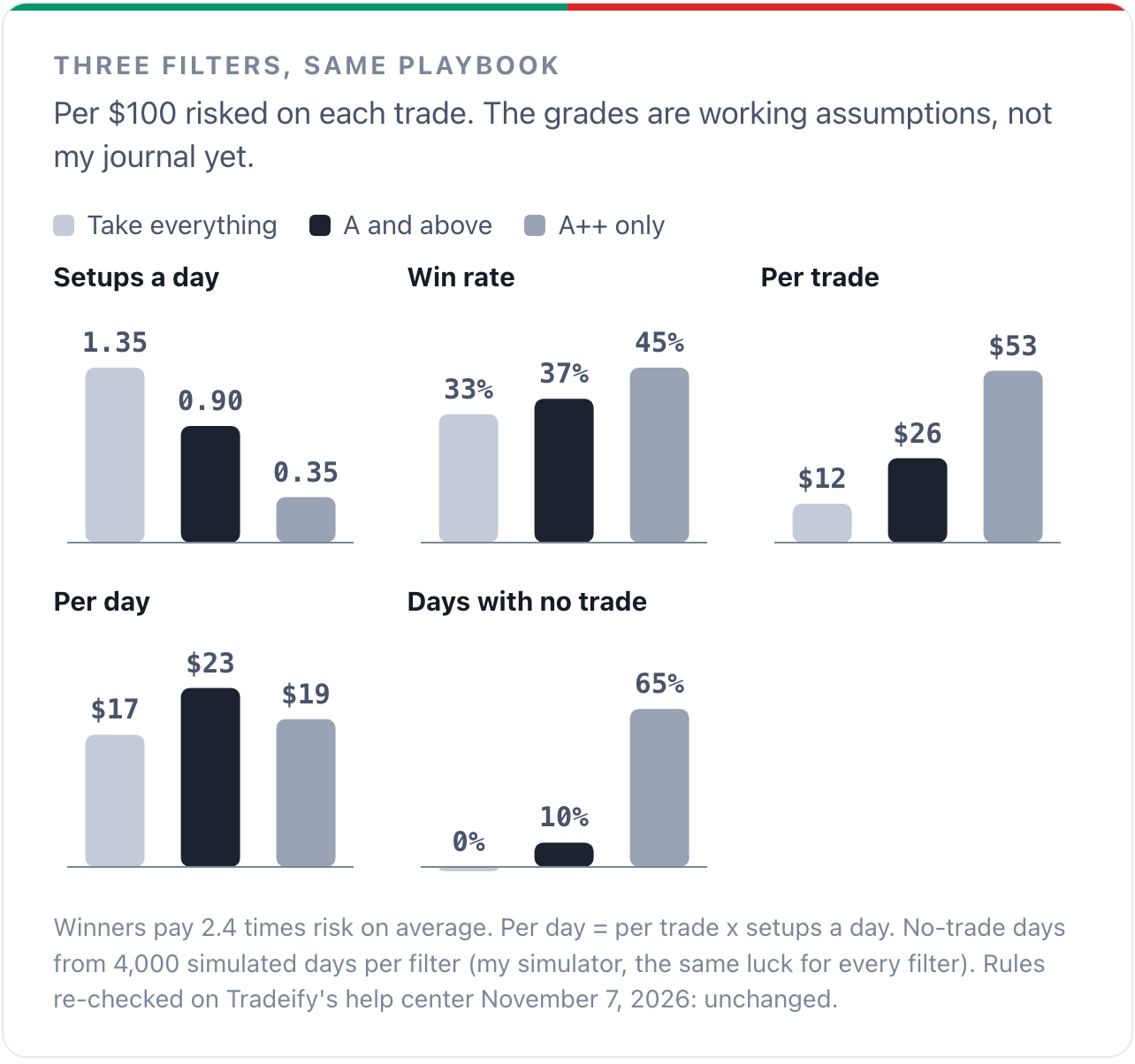
A great trade I only get once in a while can be worth less over a month than a good trade I get most days. A++ only leaves 65% of days with nothing to take.
How picky to be is a setting, and the right setting depends on what the account is for.
What a filter does to a day
Getting pickier changes three things at once. I take fewer trades, they're better trades, and my days get calmer. I simulated 4,000 days under each filter with the same luck.
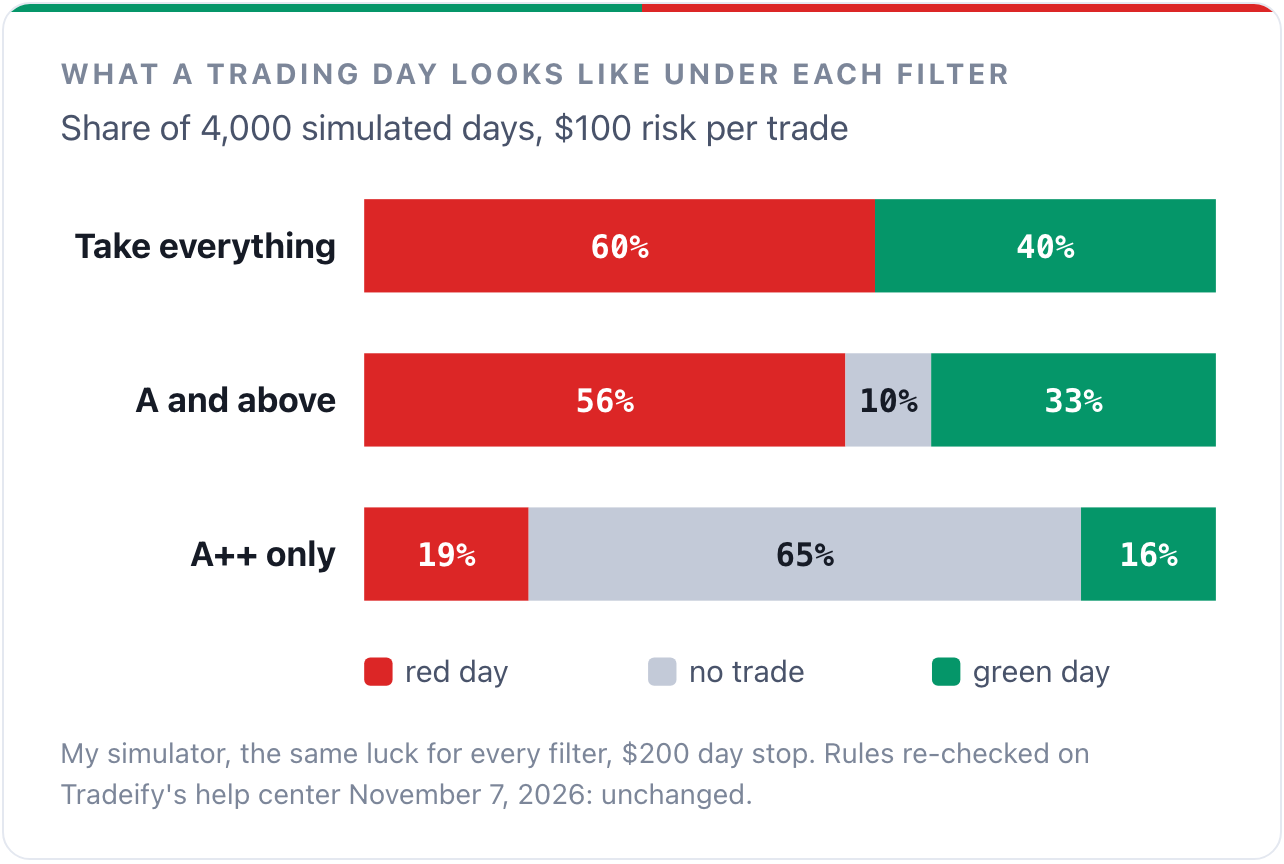
Whether that's good depends on the stage.
In an eval, speed matters and a fail costs $95, so a quiet day is a wasted day (In an eval, risk buys time). In a funded account before the lock, A and above makes the most per day, and that gets me to +$2,100 fastest. Once the floor has locked at +$100 (The $100 line that changes everything), a no-trade day costs nothing, and calm is what I want.
One warning. Pickiness at small size can starve a funded account (You can be too small to get paid). At $100 a trade, only 14% of my simulated A++-only days made more than $150, against 30% for the other two filters. Five qualifying days at that rate takes about seven weeks of trading.
My Tradeify card
Here is the whole Tradeify series on one card. Re-checked November 7, 2026: the $95 reset, the +$2,100 lock, the +$100 floor and the $150 qualifying day are unchanged on Tradeify's help center.
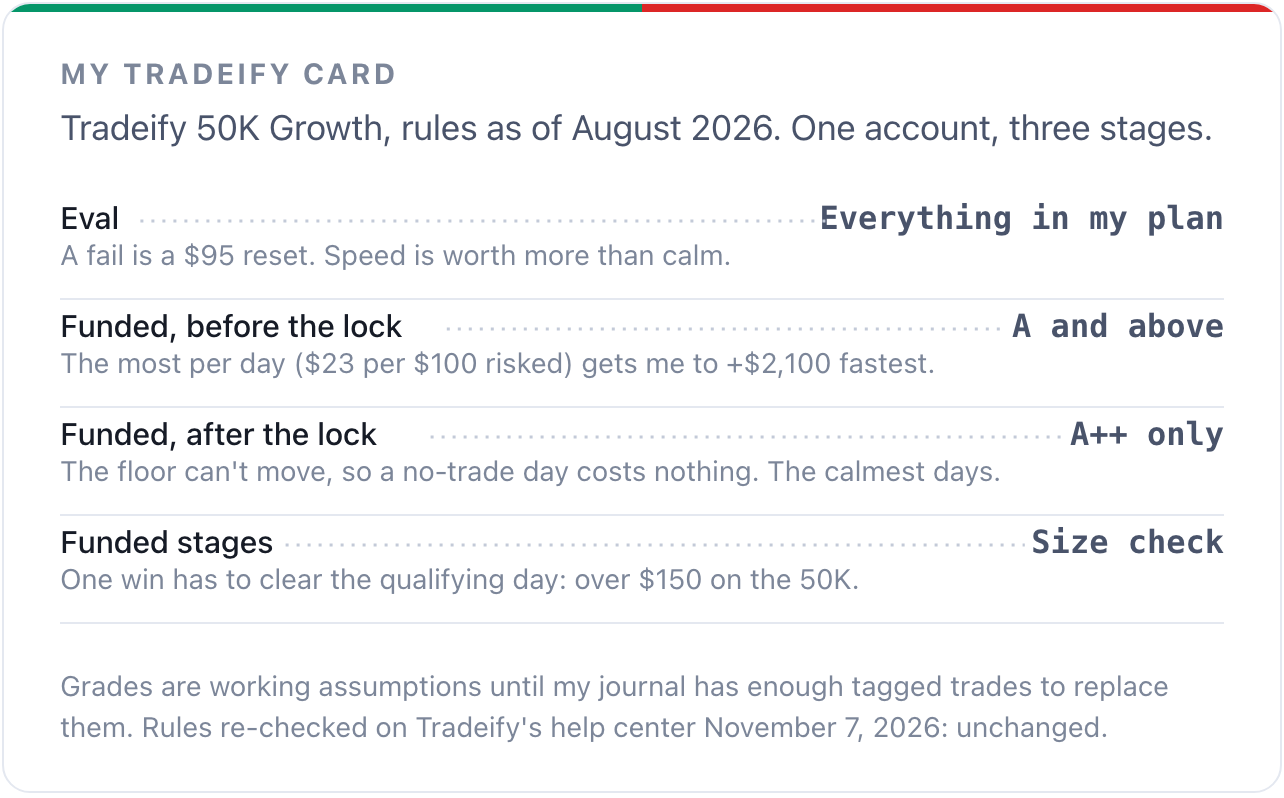
The grades stay working assumptions until my trade journal has enough tagged trades to replace them. When it does, I'll rerun the card and show what moved.
That closes Tradeify. Next is Lucid, another firm I trade, and the one account there I'd buy.
Next: At Lucid, buy the Flex
New posts land on Substack first. Free, one a week. The $20k test has a scoreboard, updated every Sunday.
Subscribe on Substack