Things I've learned
The $20k test running now, then the rest in the order I lived it: how I trade, the prop-firm rules I trade under, and the bot. The same posts go out on Substack.
The $20k test
Running now: one indicator, one instrument, two months, $20,000. Dated readouts every Sunday.
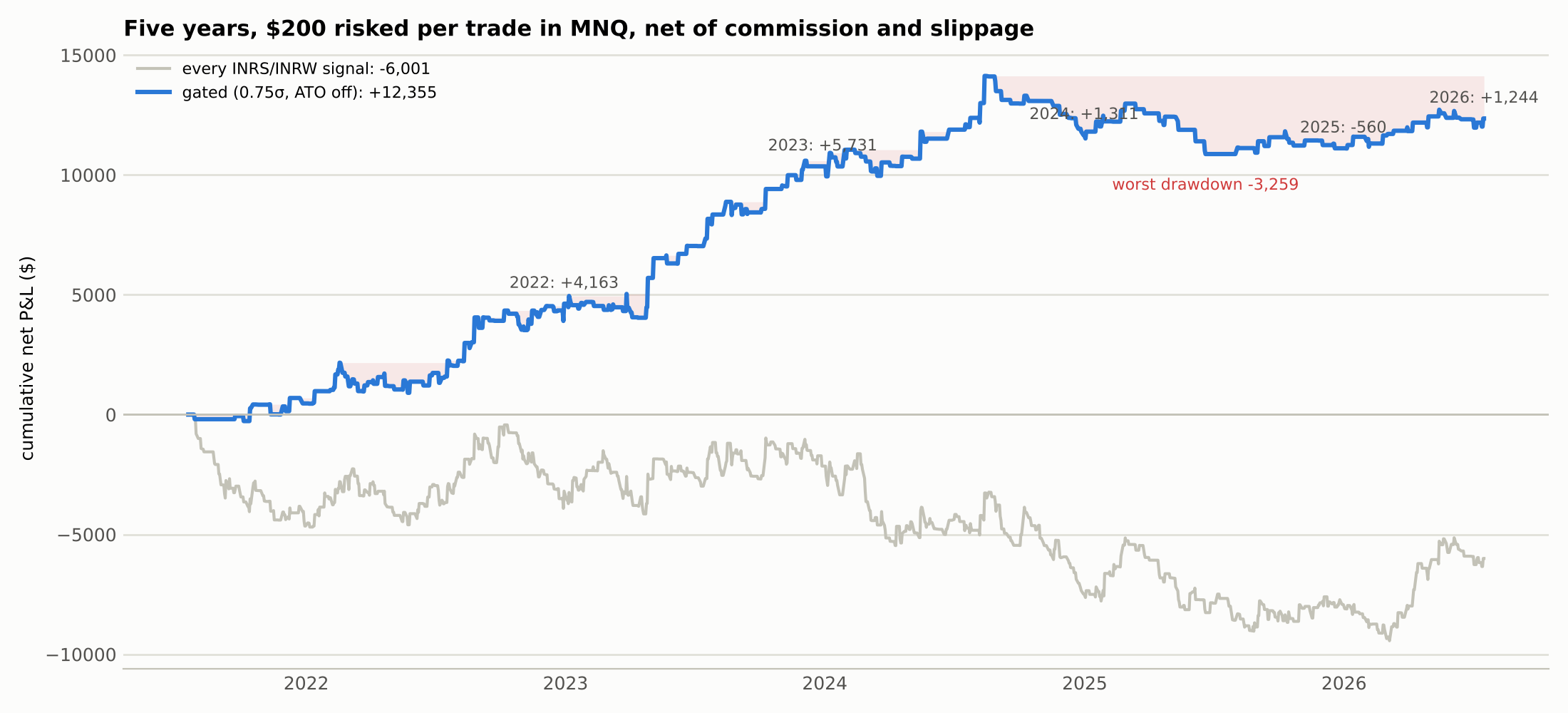
I'm changing the test. One indicator, one instrument, two months, $20,000.
Three days into the $2,400 test I found a better starting line. Here it is, with the numbers, before the first trade.
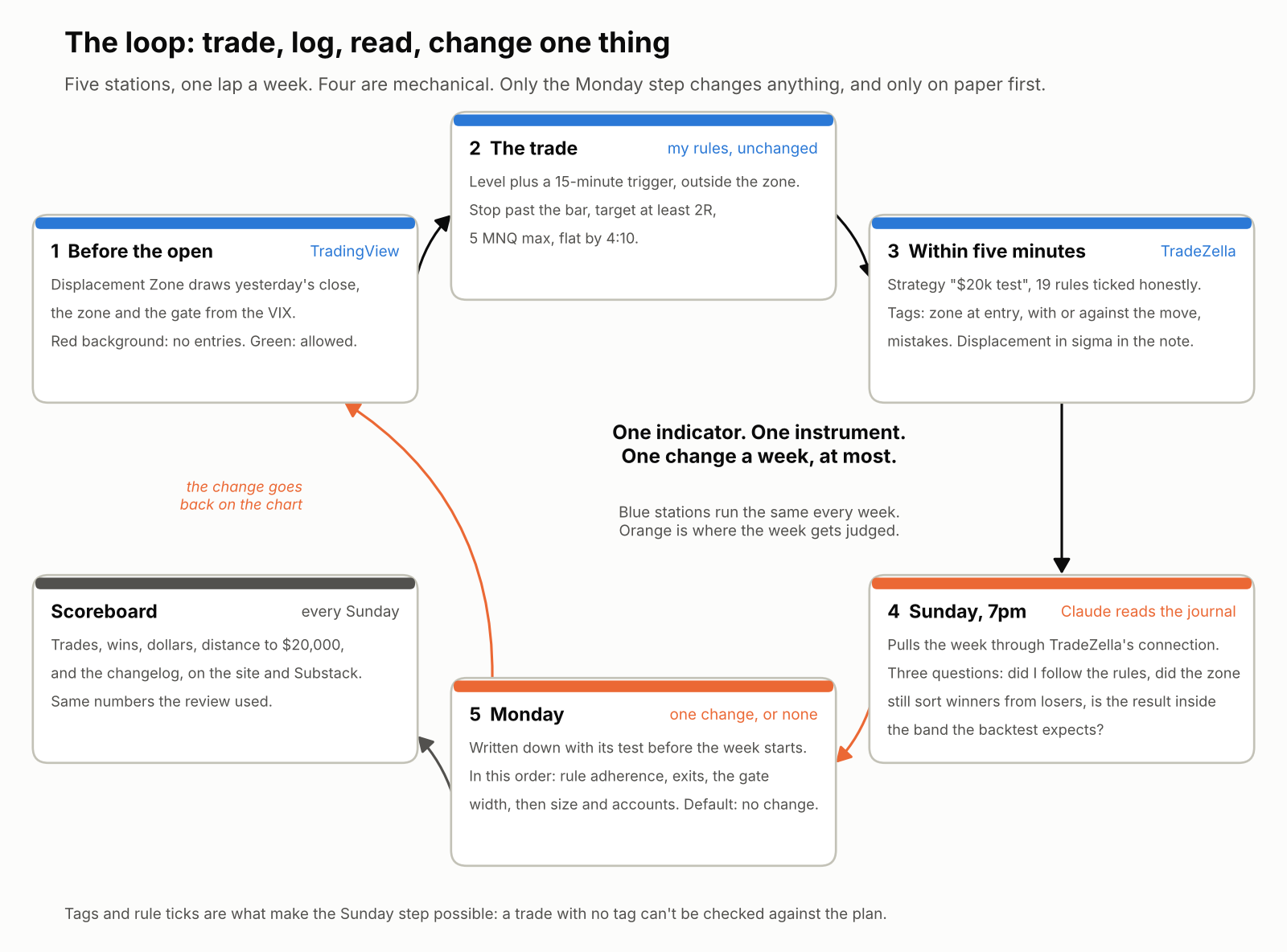
Thirteen trades won't tell me if it works. Following the rules will.
How I plan to climb the evaluations one week at a time: trade, log, let the journal get read, change one thing or nothing.
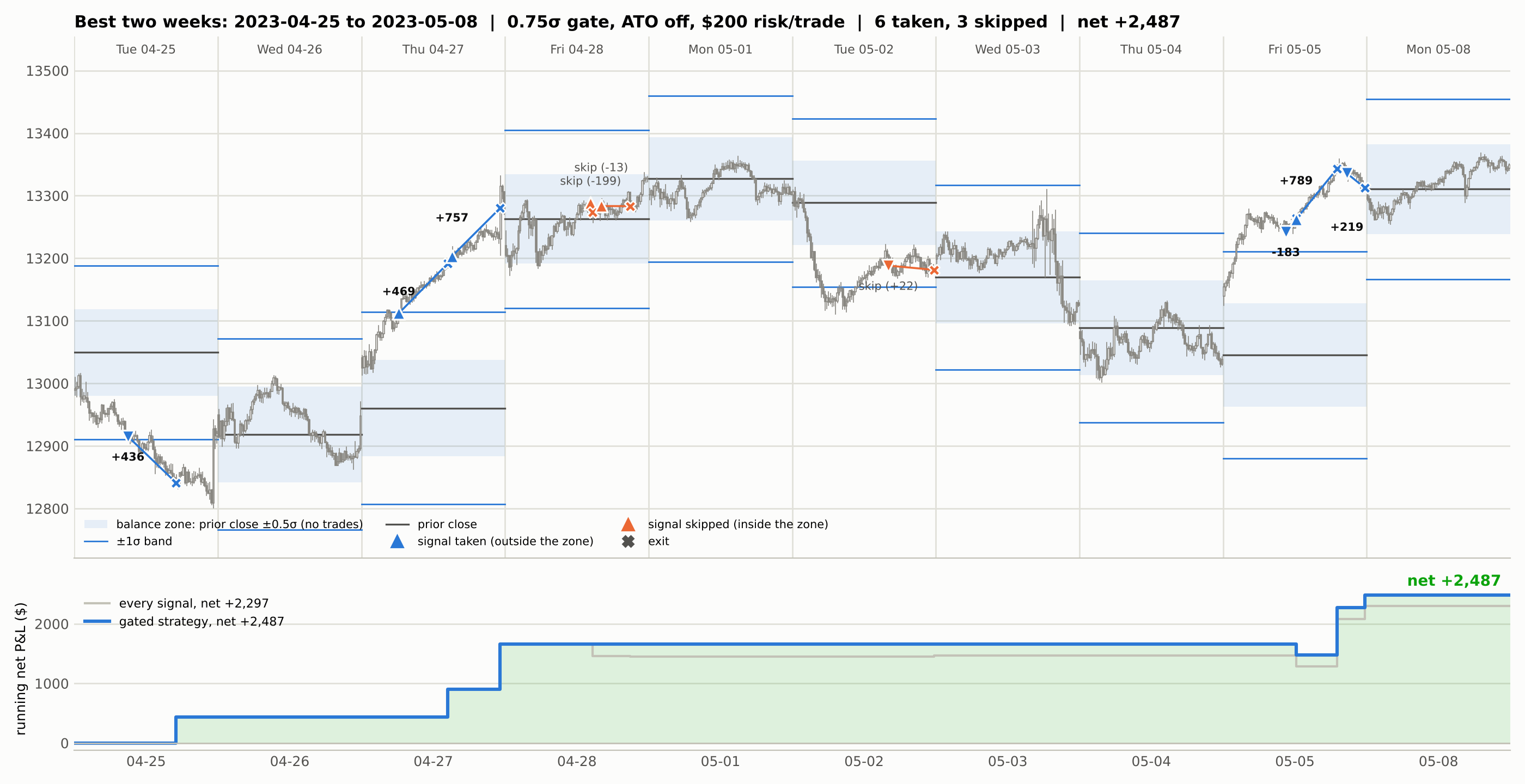
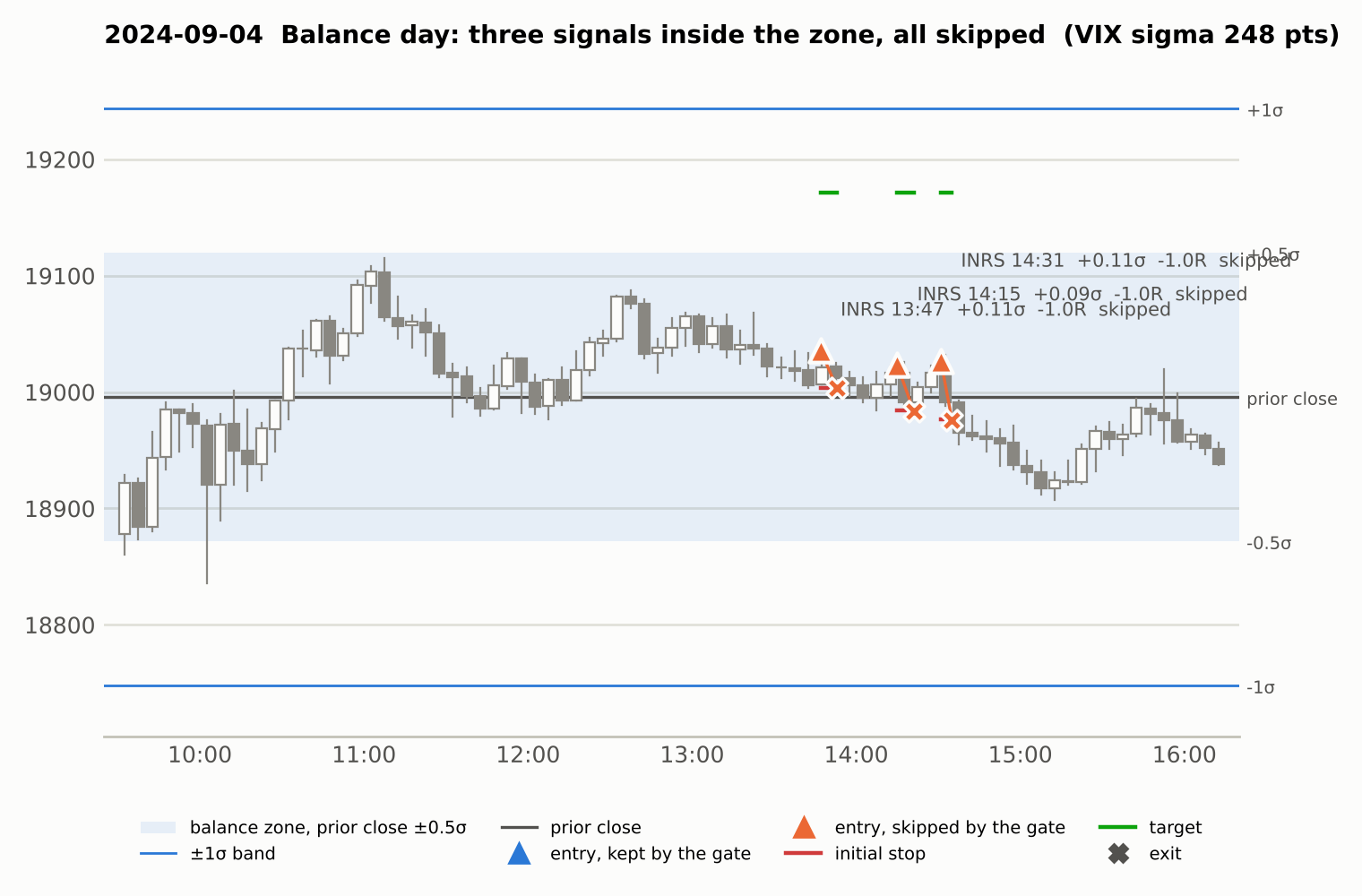
The zone on the chart: nine pictures of the rule
Real sessions from the five-year record, the three lines I draw before the open, and every signal marked taken or skipped with its result.
The $20k test: scoreboard
The four lines, the money, the tally at day zero, and the changelog. Updated every Sunday.
The $2,400 test
A prop payout, a break-even indicator, 60 days, one change a week. Scoreboard written first; dated readouts, good or bad.
My indicator breaks even. I gave it $2,400 and 60 days to get better.
A prop payout, a trading journal an AI can read, and a scoreboard I wrote down before I started.
The $2,400 test: scoreboard
A prop payout, a break-even indicator, 60 days, one change a week. Scoreboard written November 6. Updated every Sunday.
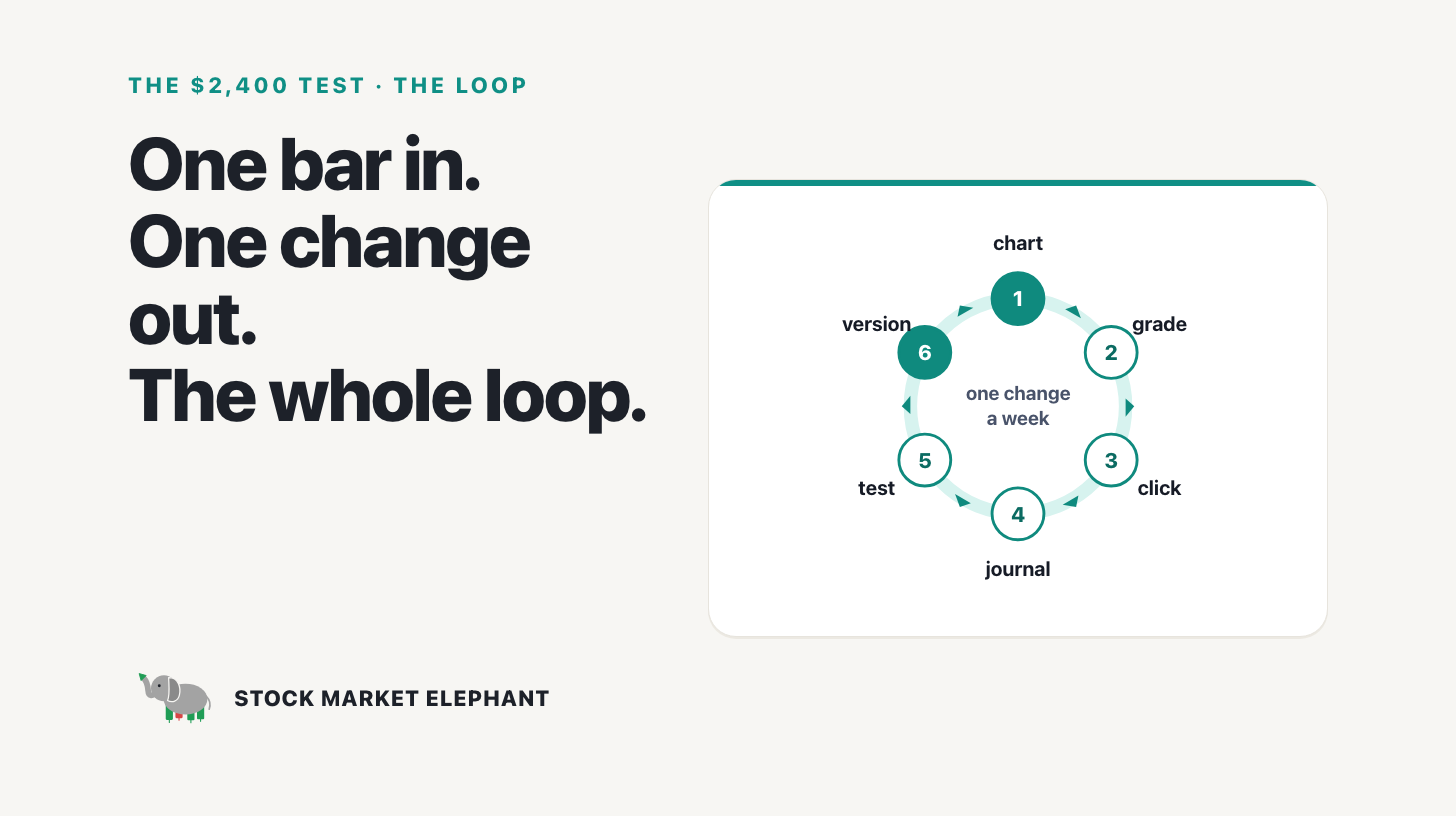
The loop: one 15-minute bar in, one indicator change out
TradingView to a grader to my phone to TradeZella to a weekend test and back to the chart. No results yet; this is the machinery.
Start here
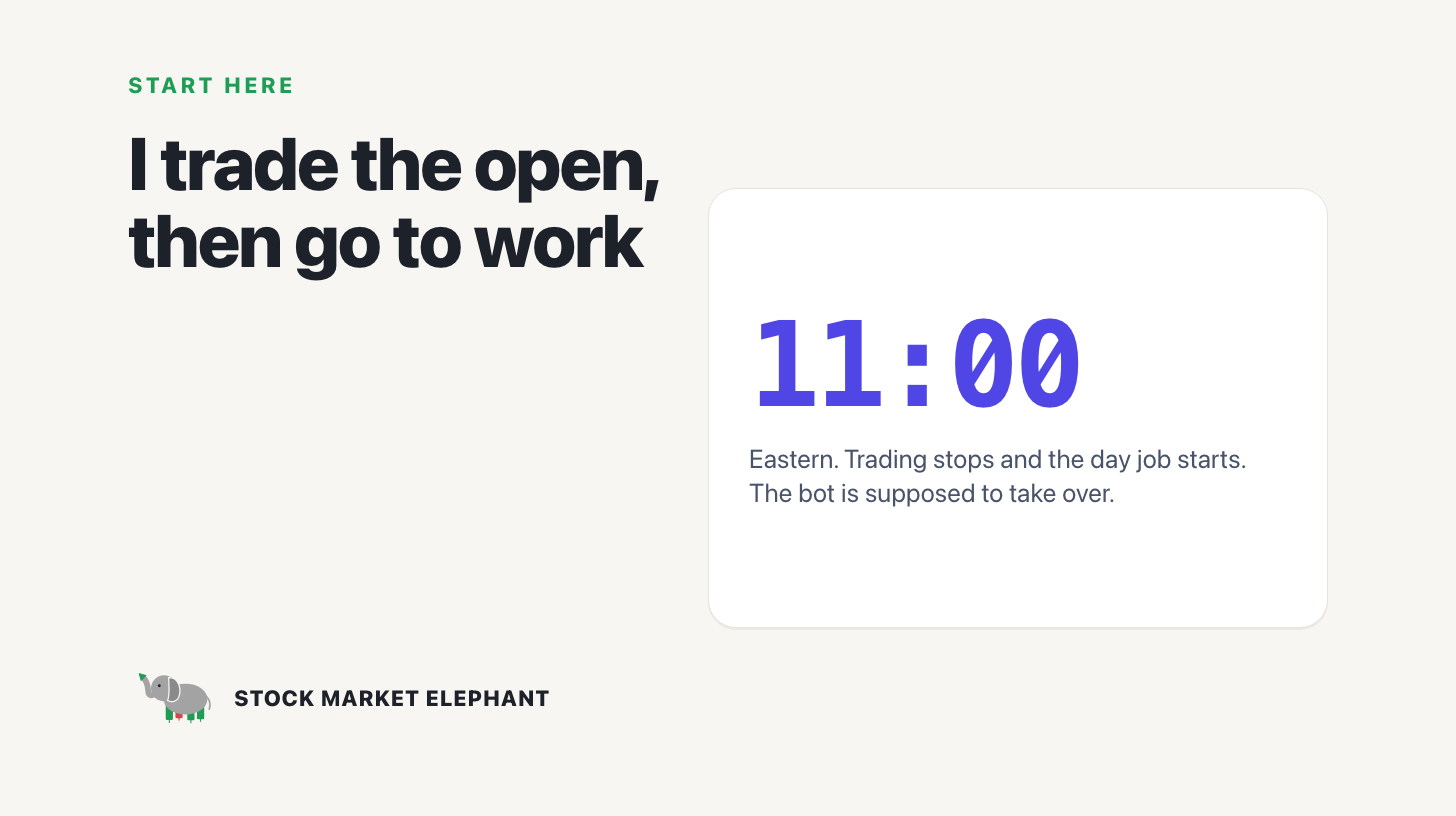
Start here
I trade futures for two hours before work and I'm trying to get a bot to do it for me. This is where I show the math, the process and the code, including the parts that don't work.
How I trade
Practical advice for the 9-to-5 trader: two hours before work, written rules, small size.
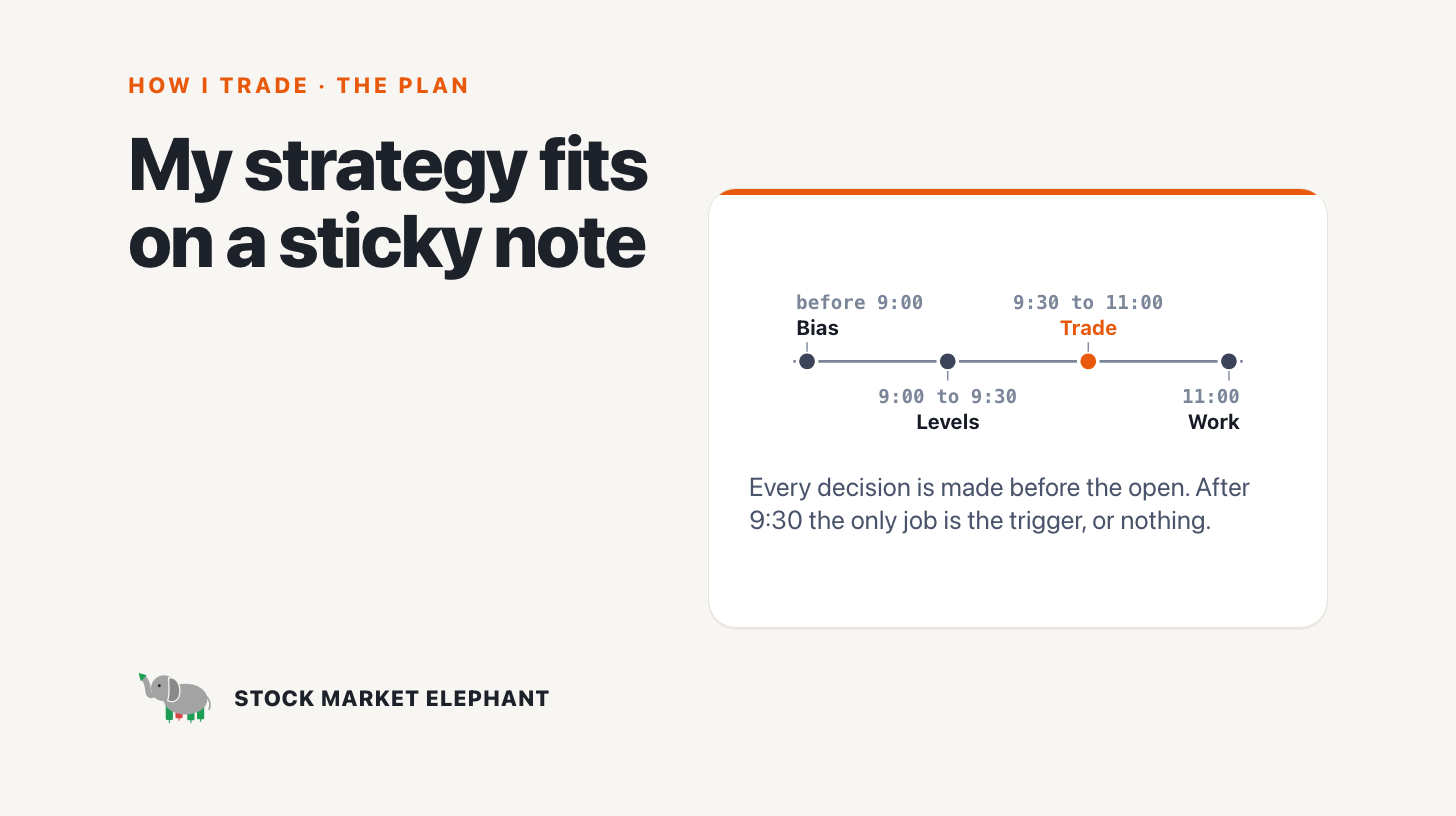
My strategy fits on a sticky note
One word for direction, two lines on the chart, a hard stop at 11:00, and a backtest that says it breaks even.
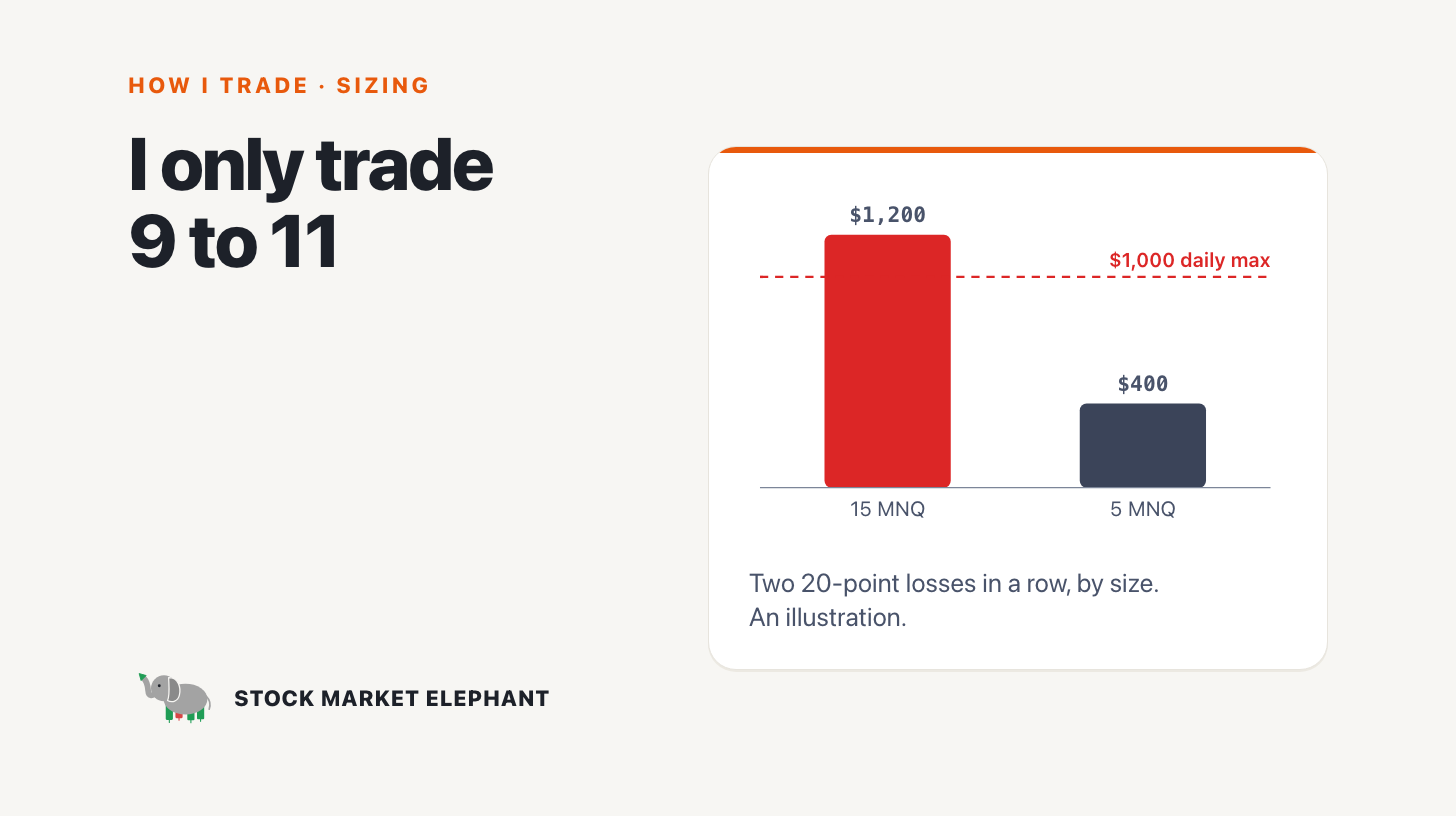
I only trade 9 to 11
Two hours on weekdays, a few hours on the weekend, and smaller size than I used to think I needed.
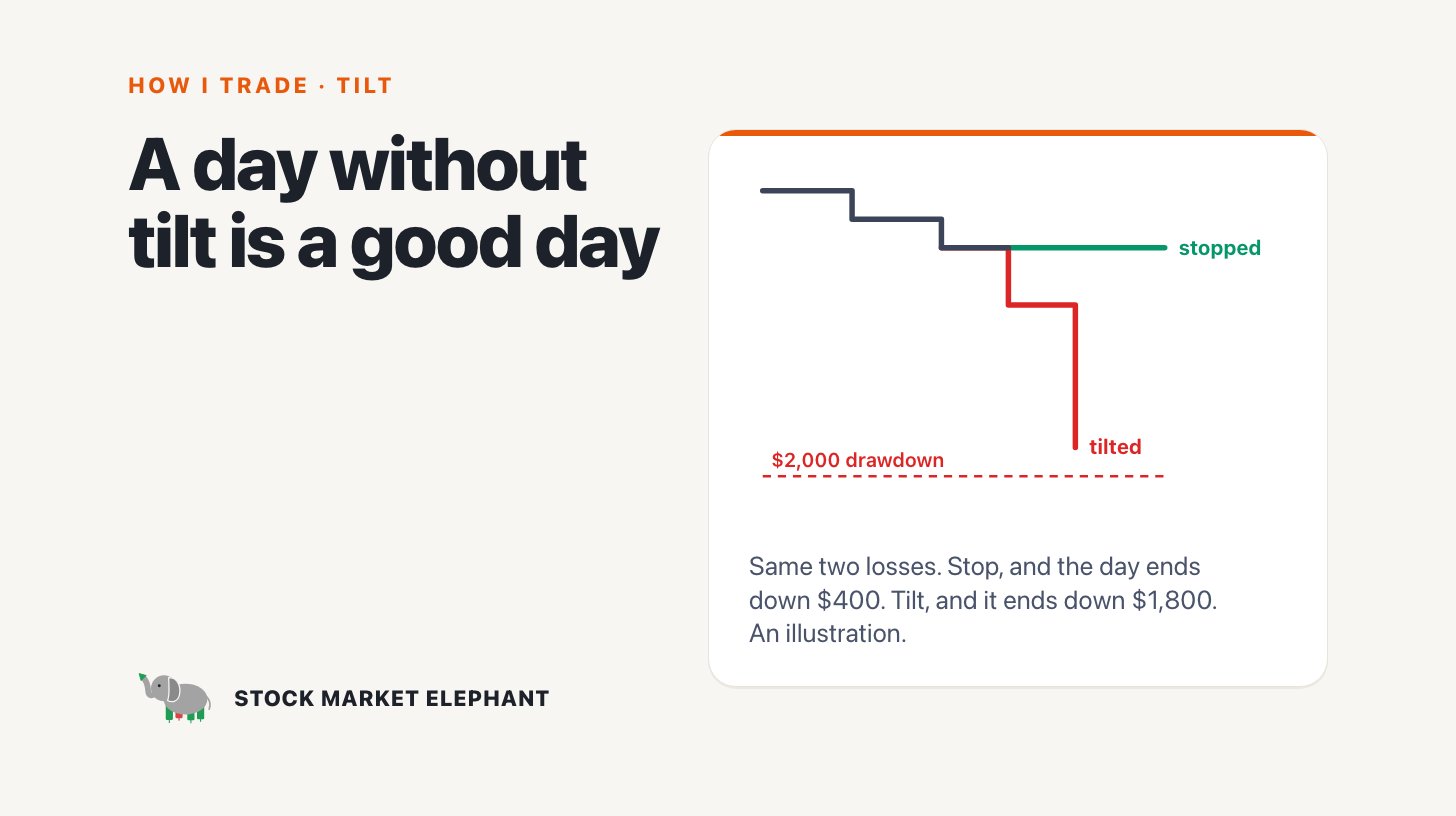
Every day you don't tilt is a good day
Two mornings with the same two losing trades, and why only the tilted one hurts the account.
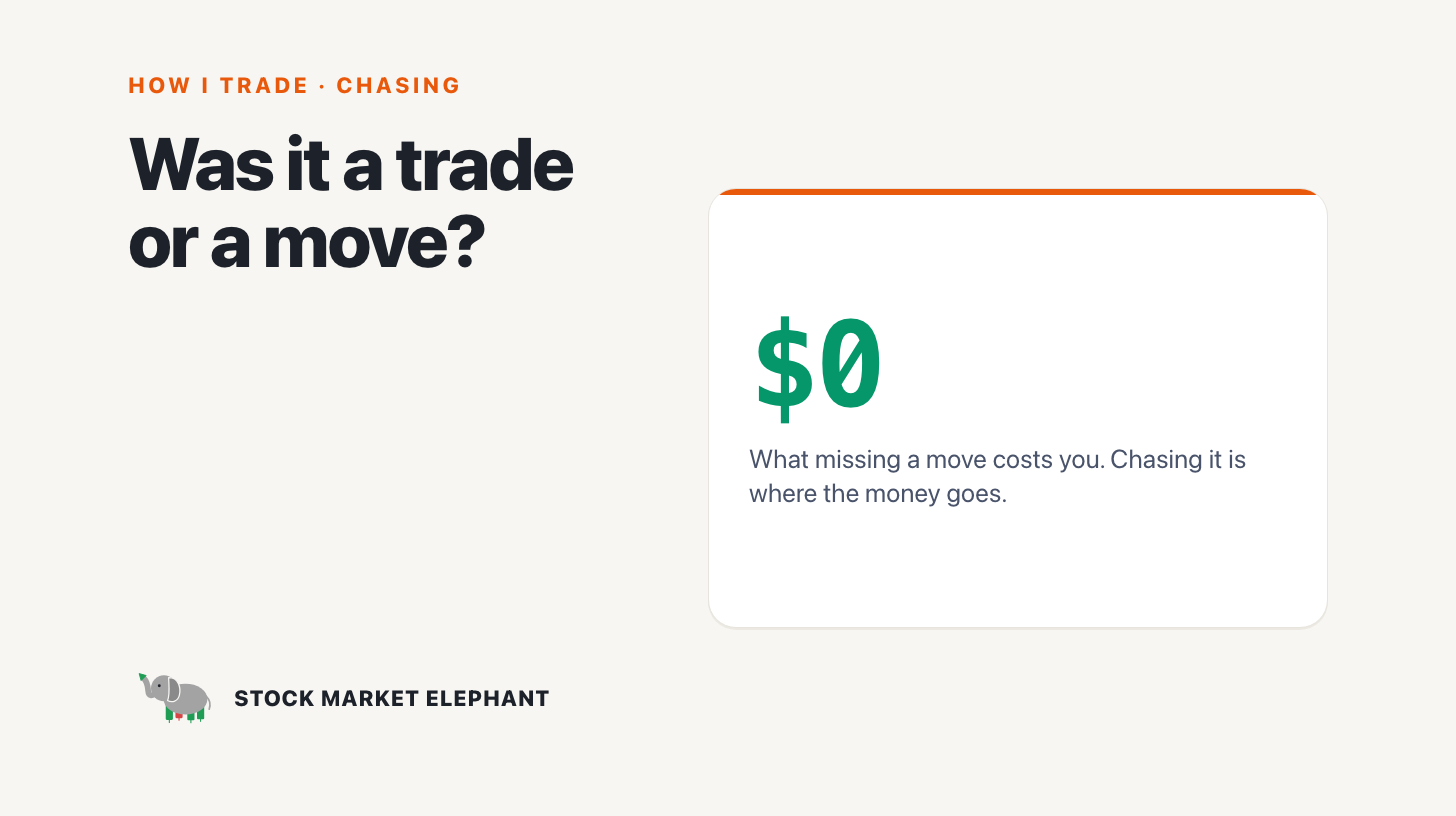
Was it a trade or was it a move?
Price goes somewhere every day. A trade is only the part that matched my plan.
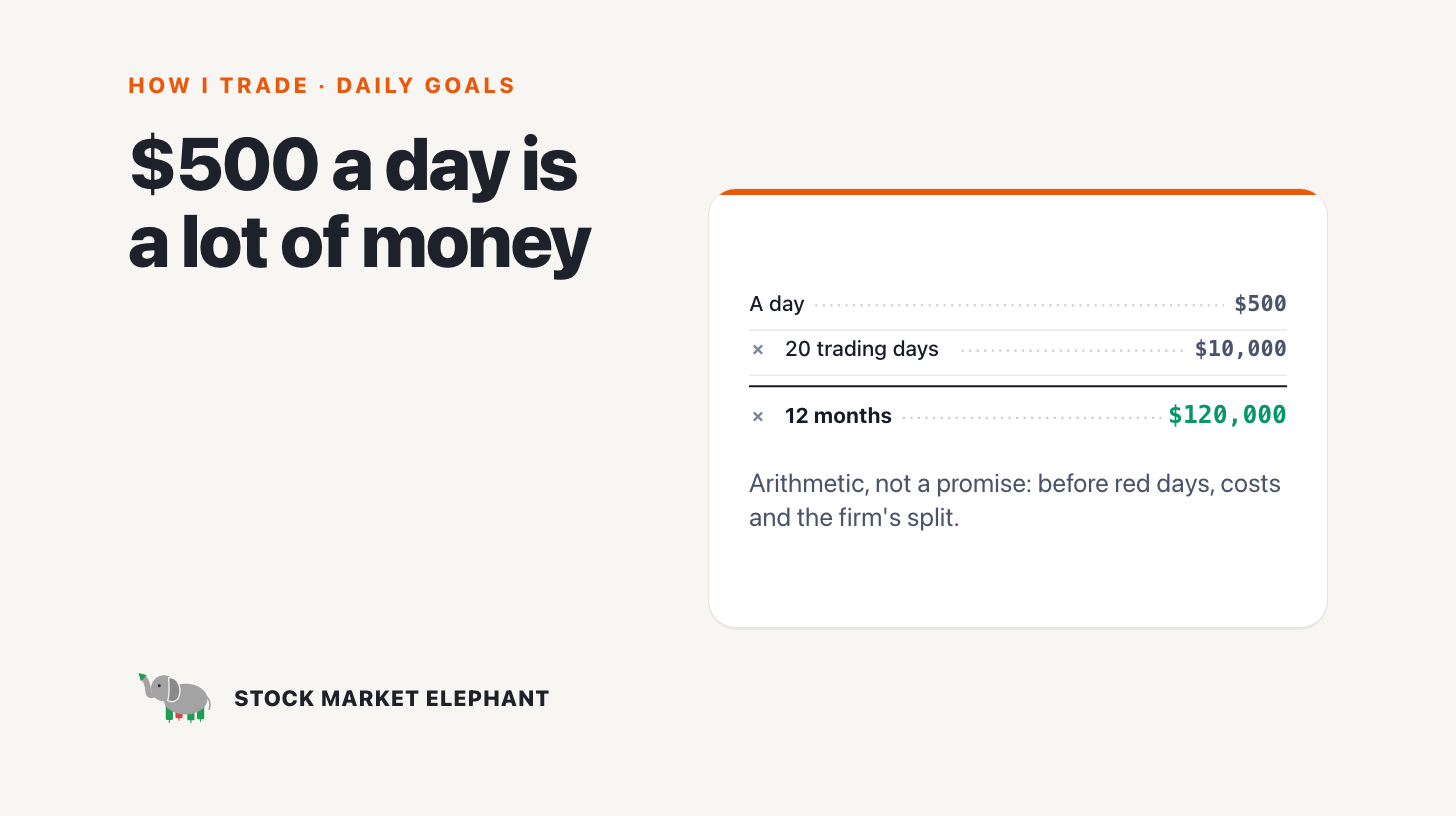
$500 a day is a lot of money
What a $10,000 day costs in size, and what it does to a payout.
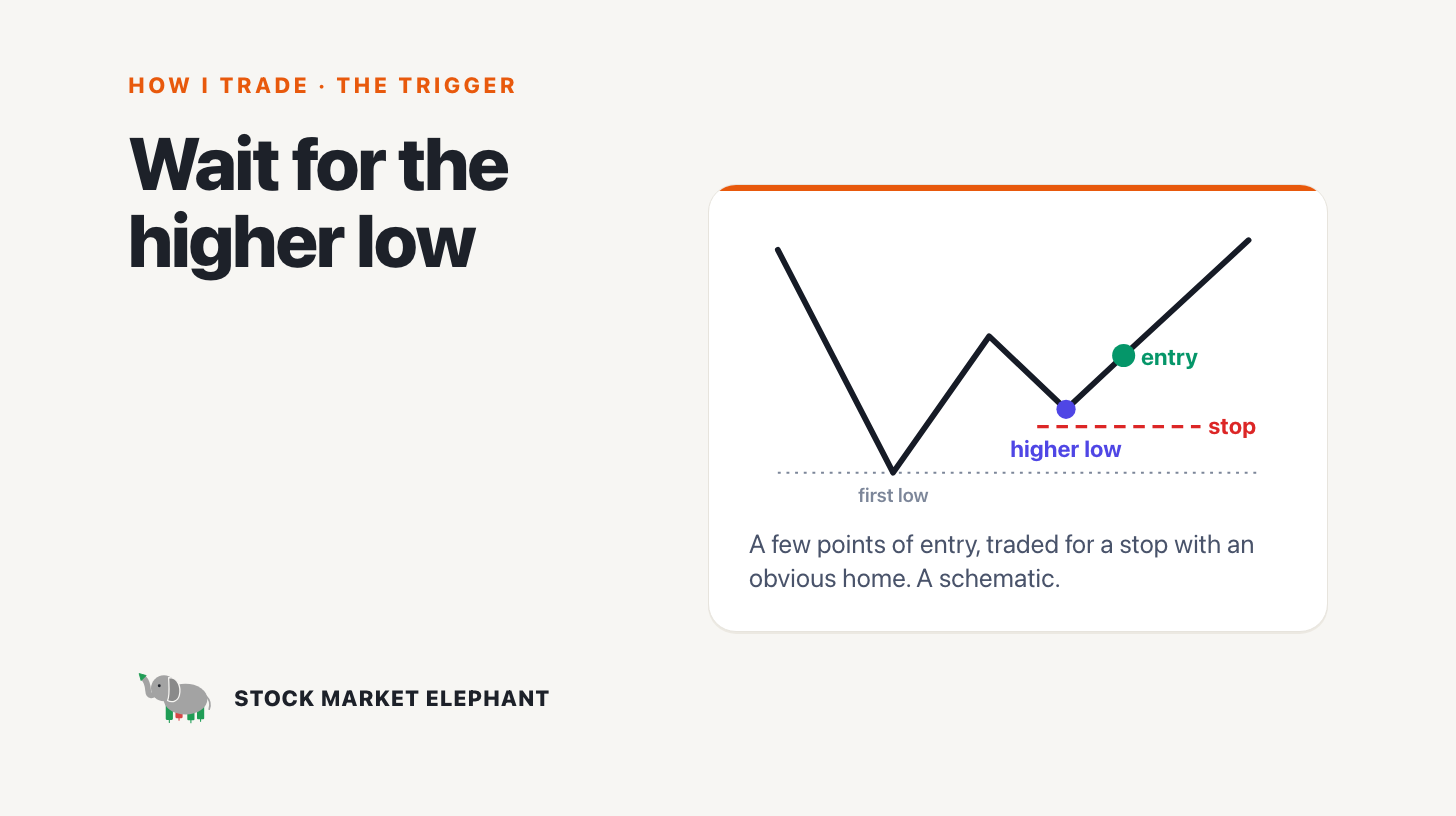
Wait for the higher low
On a long day I let the 15-minute chart show me buyers before I buy. It costs a few points and gives the stop a place to go.
Prop-firm rules
One firm at a time: the rules, the math, and how I trade each account.
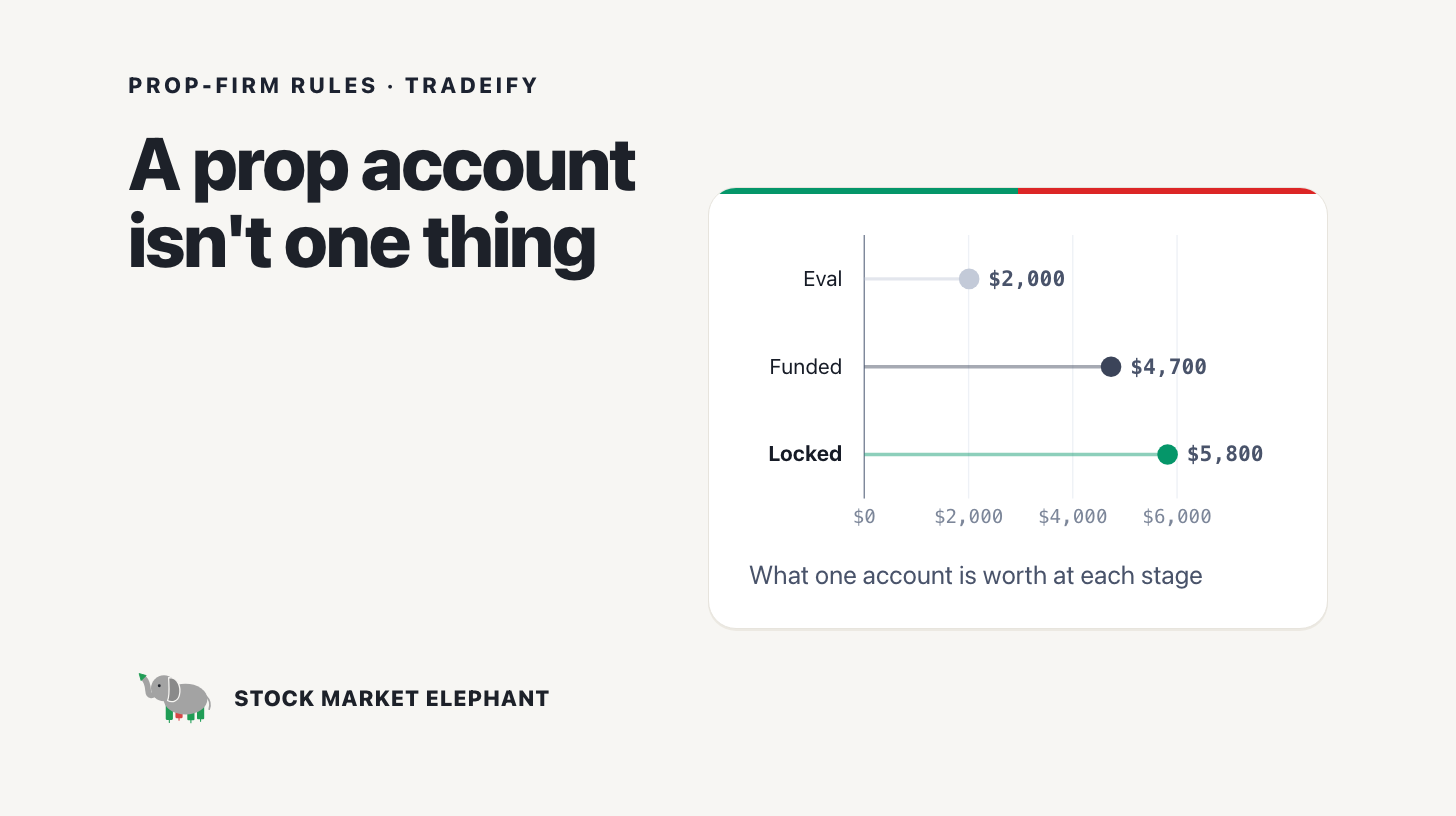
A prop account isn't one thing
What an eval, a funded account and a locked funded account are each worth to me, and how I trade each one.
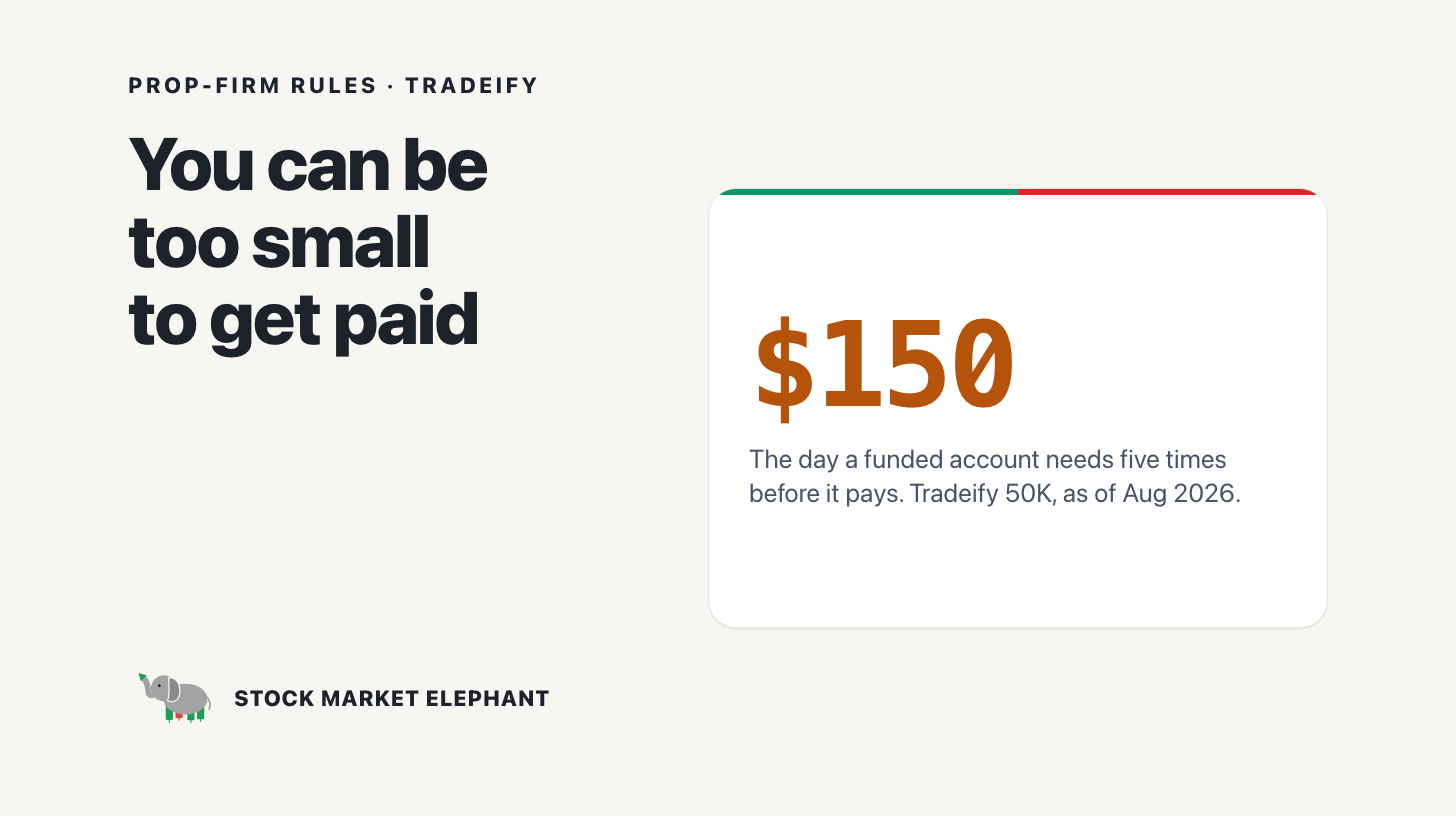
You can be too small to get paid
Tradeify's payout rule sets a minimum trade size, and a locked account traded below it is worth about $100.
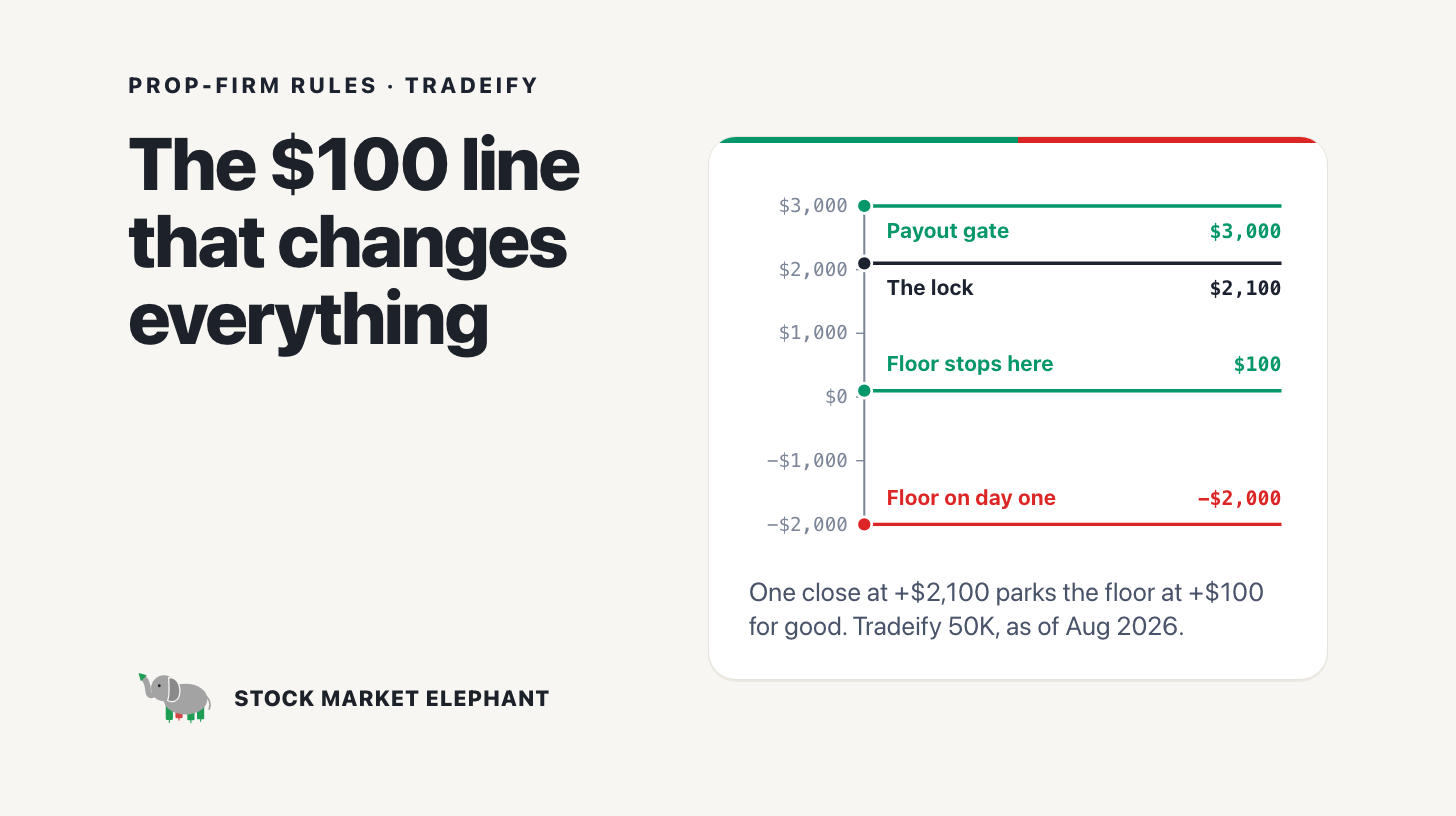
The $100 line that changes everything
How one end-of-day close freezes Tradeify's trailing floor, and what that does to a funded account's value.
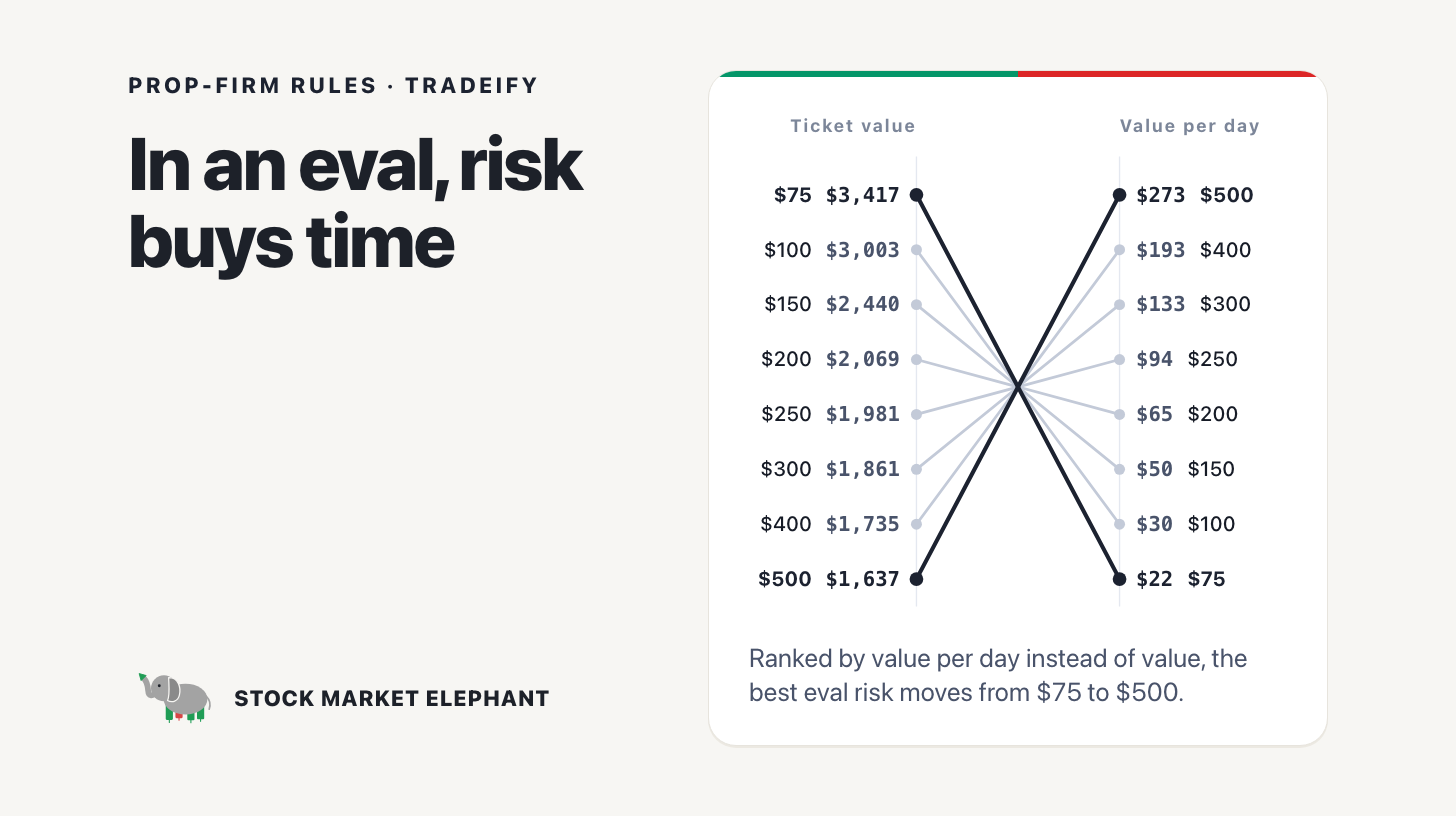
In an eval, risk buys time
Why I size up in a Tradeify eval, even though more risk makes each ticket worth less on paper.
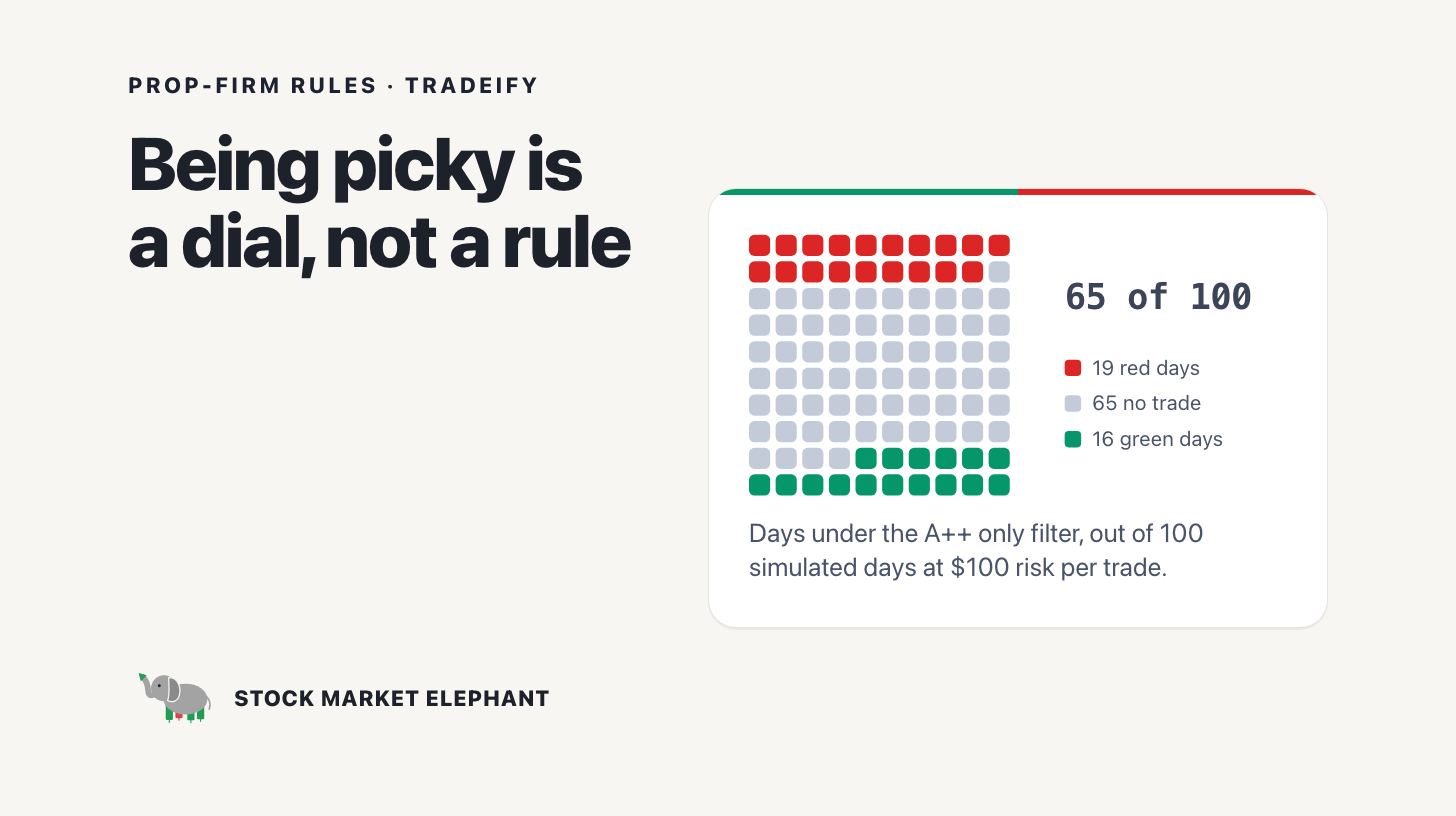
Being picky is a dial, not a rule
Three setup filters run through the same simulator, and the one I use at each stage of a Tradeify account.
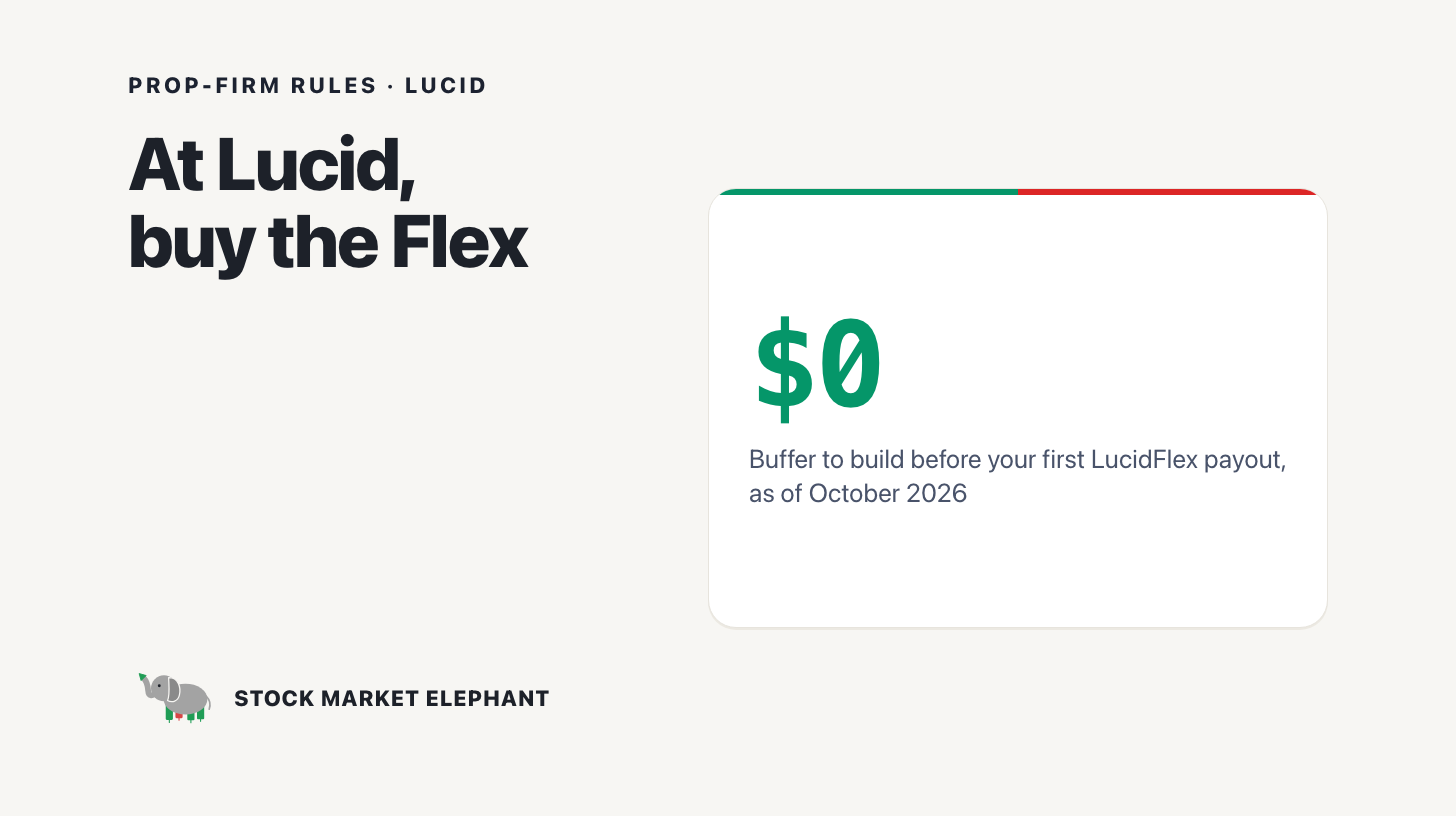
At Lucid, buy the Flex
Lucid sells several accounts. Only one of the three main accounts gets you paid without building a cushion first.
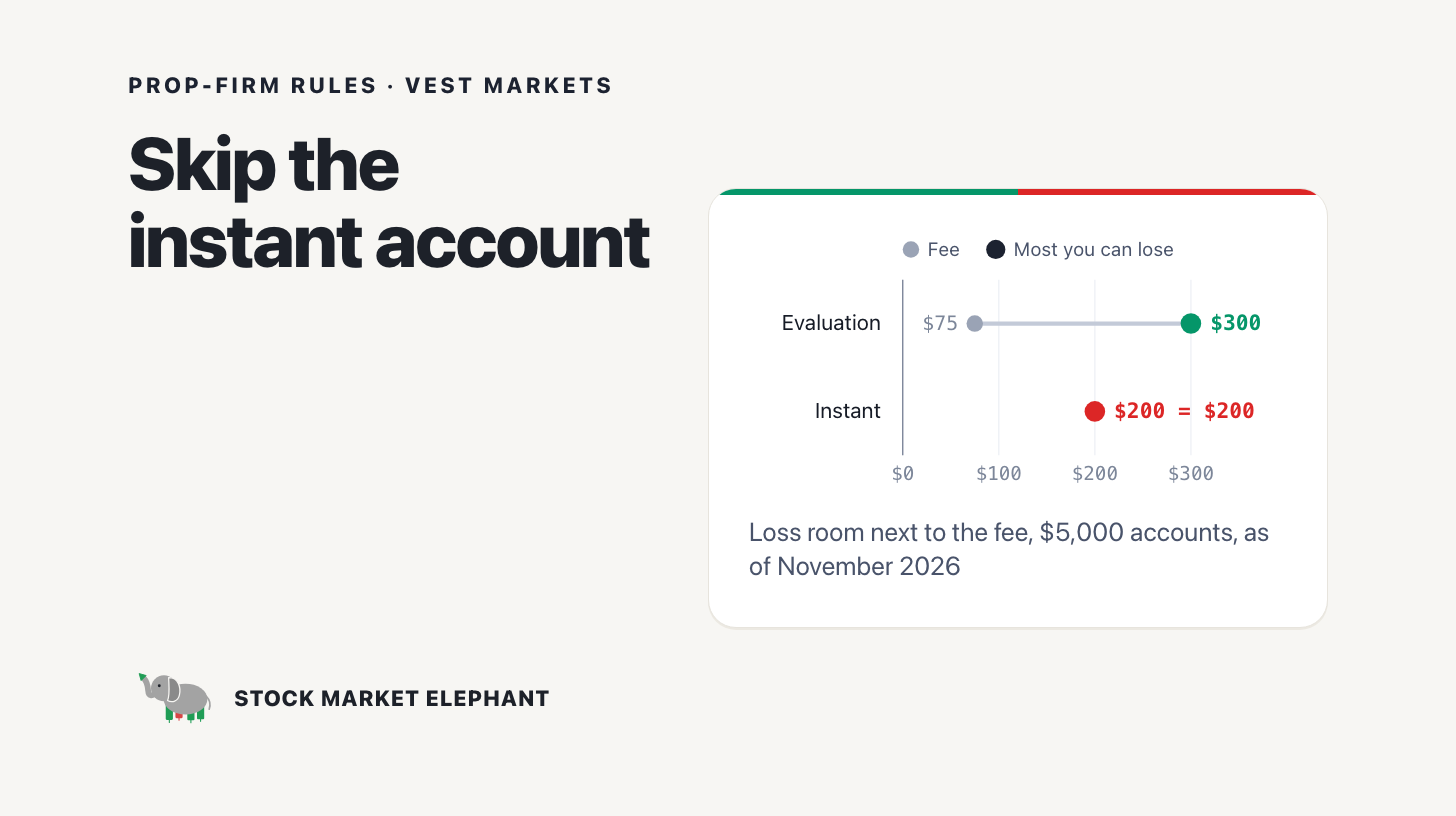
At Vest, skip the instant account
Why a $75 evaluation buys more than a $200 instant account at the same $5,000 size.
The bot
Trying to take myself out of it: the YouTube study, the backtests, the bot that sends me signals.
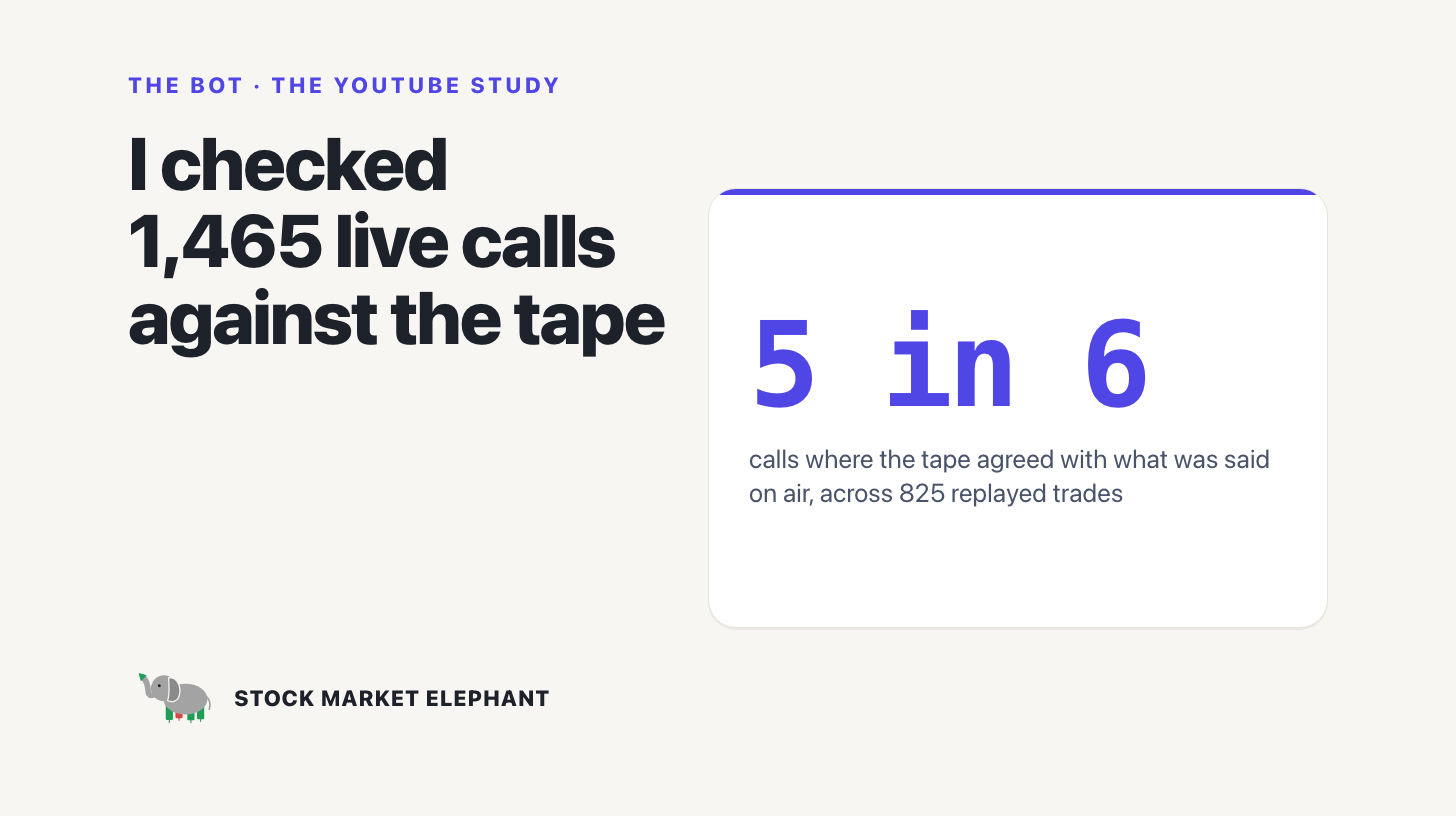
I checked 1,465 live trade calls against the tape. 5 in 6 were honest.
Two YouTube channels, nine regular hosts who call their entries on air (plus the odd guest), 1,052 streams. I turned the talk into a table and lined it up with 1-minute prices.
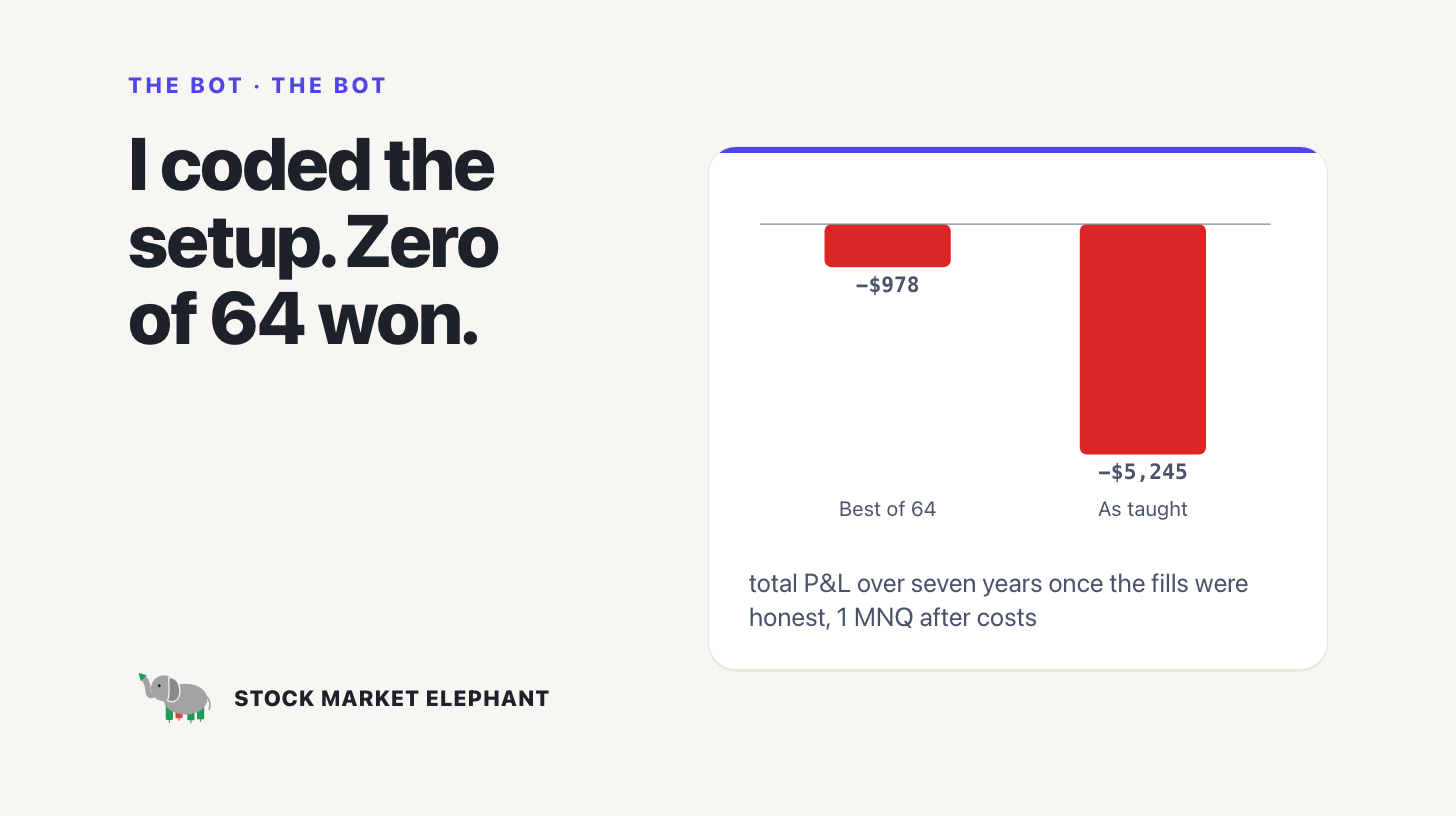
I coded a YouTube trader's setup. Zero of 64 versions made money.
A setup you can say in four steps is a rule, and a rule can be backtested. The first run looked great because the fills were wrong.
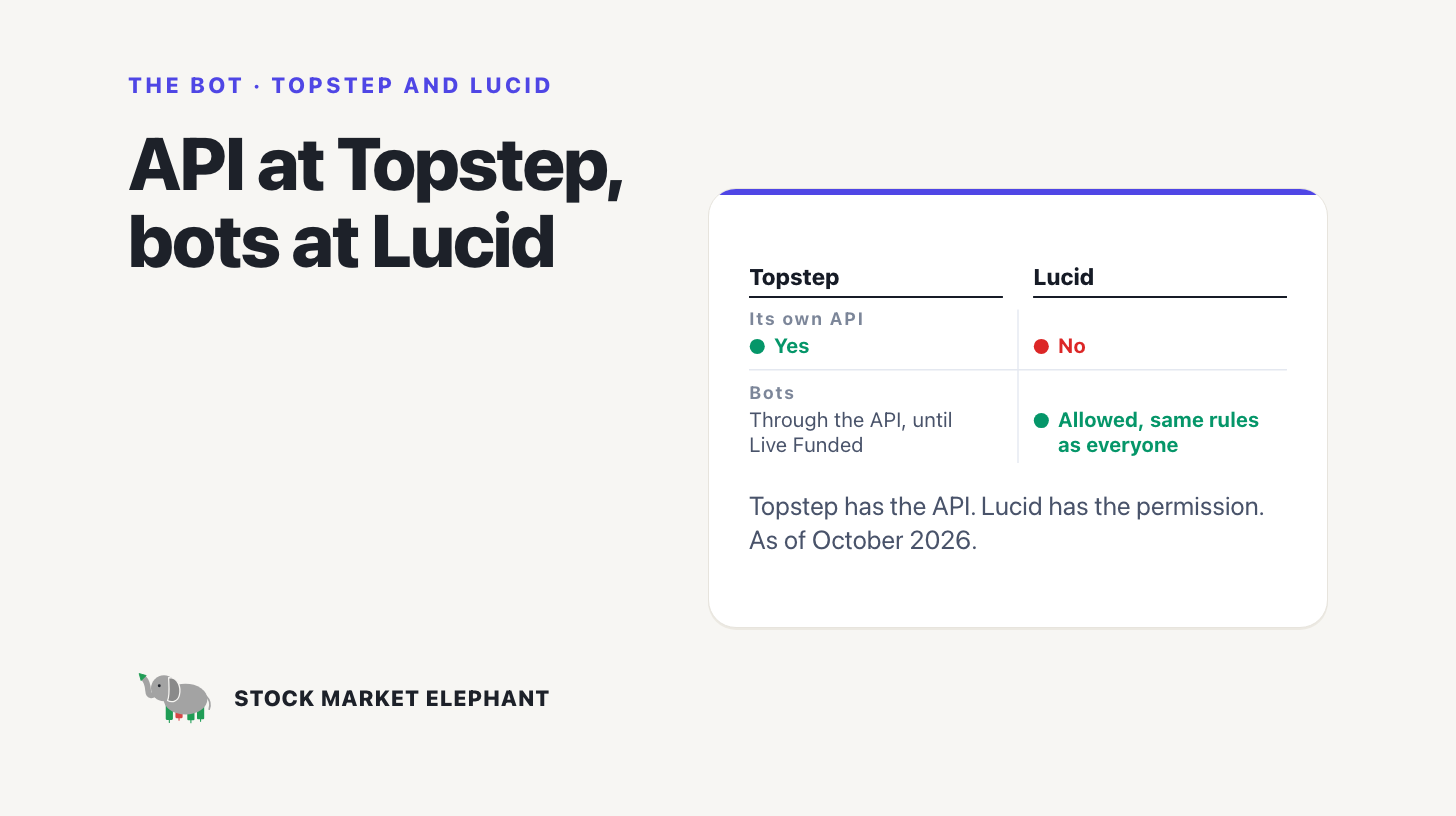
The firm with the API isn't the firm that allows the bot
Topstep has the clean API, Lucid has the permission, and getting both onto one account takes a workaround.
New posts land on Substack first. Free, one a week. The $20k test has a scoreboard, updated every Sunday.
Subscribe on Substack